


You’ve heard it a thousand times: chug your protein shake within 30 minutes of your last rep or your gains are gone. That obsession with the “anabolic window” has gym-goers sprinting to their shakers before they’ve even wiped down the bench. But the role of protein shake timing in gym performance is more nuanced than the bro-science crowd wants you to believe. Timing matters, yes. But it’s not the whole story. Here’s what the research actually says, and how to use it to build more muscle with less stress.
Table of Contents
- Key takeaways
- The role of protein shake timing at the gym
- Timing windows around your workout
- Whey vs. casein: choosing the right protein
- Building your protein shake schedule
- My take on the timing obsession
- Fuel your training with Savageaf
- FAQ
Key takeaways
| Point | Details |
|---|---|
| Daily intake beats perfect timing | Hitting 1.6–2.2g protein per kg daily matters more than obsessing over exact shake timing. |
| Spread protein across meals | Consuming 20–40g every 3–4 hours maximizes muscle protein synthesis better than one massive dose. |
| Pre-workout window is real | Drinking a shake 30–60 minutes before training supplies amino acids and reduces muscle breakdown during your session. |
| Post-workout flexibility exists | You have a 1–2 hour window after training, not a strict 30-minute deadline, to get protein in. |
| Protein type changes everything | Whey works best around workouts; casein before bed supports overnight muscle repair and growth. |
The role of protein shake timing at the gym
Before you can time anything correctly, you need to understand what you’re actually working with. The foundation is your total daily protein intake. Not your post-workout shake. Not your bedtime casein. The whole day.
Research is clear that 1.6–2.2g per kilogram of body weight per day is the range where muscle protein synthesis and recovery operate at their peak. For a 185-pound (84kg) athlete, that’s roughly 134 to 185 grams of protein every single day. Miss that number consistently and no amount of perfect timing will save your gains.
Here’s where distribution comes in. Consuming 20–40 grams of high-quality protein every 3–4 hours across your meals keeps muscle protein synthesis elevated throughout the day. Your body can only process so much protein at once for muscle-building purposes. Dumping 80 grams into one meal doesn’t double the effect. It just means a lot of that protein gets oxidized for energy instead.
Even distribution across four meals stimulates 24-hour muscle protein synthesis 25% more effectively than skewed intake patterns. That’s the kind of edge that compounds over months of training.
| Goal | Daily protein target | Per-meal dose | Meal frequency |
|---|---|---|---|
| Muscle gain (younger adults) | 1.6–2.0g/kg | 20–30g | Every 3–4 hours |
| Muscle gain (older adults) | 2.0–2.2g/kg | 30–40g | Every 3–4 hours |
| Maintenance | 1.2–1.6g/kg | 20–25g | Every 4–5 hours |
One more thing worth knowing: age changes the equation. Older adults need 25–40g per meal to overcome anabolic resistance, a real physiological shift where muscles become less responsive to protein signals. If you’re 40-plus and training hard, you need more protein per sitting to get the same muscle-building signal a 25-year-old gets from 20 grams.
Pro Tip: If you’re regularly going more than 5 hours between meals, that’s the gap where a protein shake earns its place in your day. It’s not about ritual. It’s about keeping synthesis elevated.
Timing windows around your workout
Now for the part everyone actually wants to know. When should you drink your shake relative to training?
Pre-workout shake timing
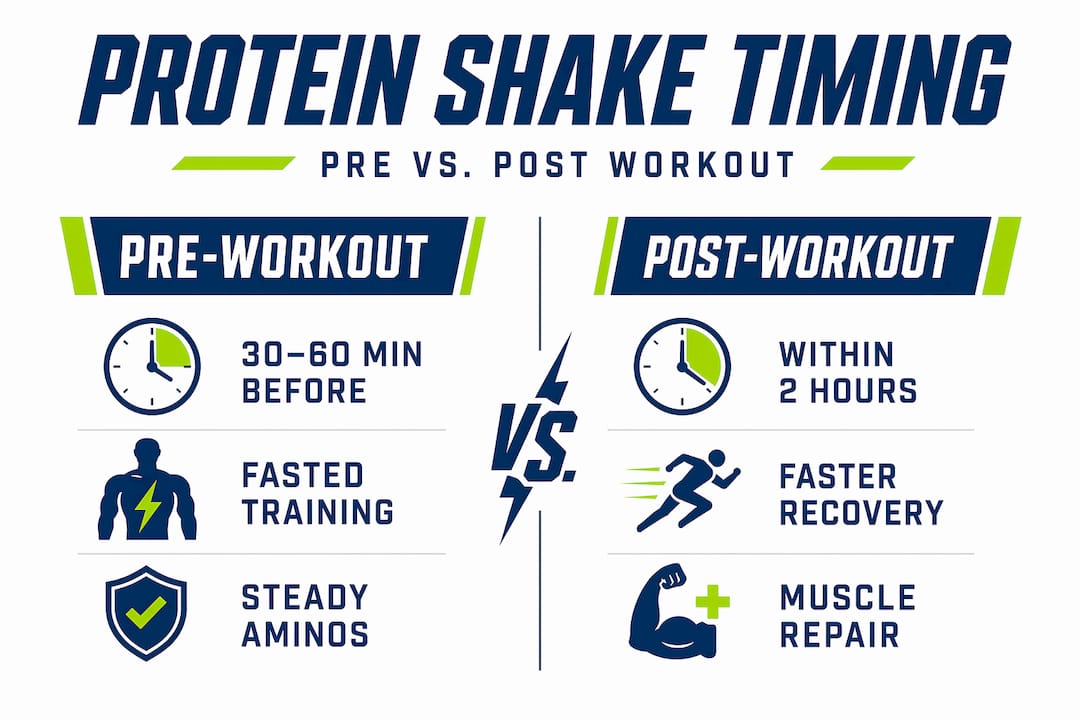
Drinking a protein shake 30–60 minutes before your session gives your body a steady supply of amino acids during training. Your muscles are under stress. Protein breakdown accelerates. Having circulating amino acids available reduces that breakdown and sets up a better anabolic environment for the work you’re about to do.

This matters most if you’re training fasted or if your last meal was more than 4 hours ago. If you ate a solid protein-rich meal 90 minutes before hitting the gym, you’re already covered. Don’t force a shake just because the clock says so.
Post-workout shake timing
Here’s where the myth gets destroyed. The strict 30-minute anabolic window is outdated. Muscles remain receptive to protein for up to 48 hours post-exercise as repair and remodeling continue. The urgency people feel to chug protein the second they rack the bar is mostly marketing, not physiology.
That said, consuming protein within 1–2 hours after training does support recovery. It’s not that timing doesn’t matter. It’s that you have far more flexibility than you’ve been told. A shake within two hours of finishing your workout is solid practice. A shake at the 35-minute mark versus the 55-minute mark makes no measurable difference.
Intra-workout considerations
For sessions under 60 minutes, you don’t need protein during training. Your pre-workout meal or shake covers you. For longer, high-intensity sessions (90 minutes or more), a small amount of protein during training, around 10–15 grams mixed with carbohydrates, can help maintain amino acid availability and reduce muscle protein breakdown.
- Pre-workout (30–60 min before): 20–30g protein, especially if fasted or far from your last meal
- Post-workout (within 1–2 hours): 25–40g protein to kickstart recovery
- Intra-workout (sessions over 90 min): 10–15g protein with fast carbs if needed
- Bedtime: 30–40g casein to support overnight muscle repair
Pro Tip: If you train first thing in the morning and can’t stomach a full meal, a half-serving whey shake 20 minutes before you leave the house is enough to protect muscle during your session.
Whey vs. casein: choosing the right protein
Not all protein shakes are created equal. The type of protein you use matters as much as when you use it, and understanding the difference between whey and casein changes how you approach your entire supplement strategy.
Whey protein is the speed demon. Whey absorbs in 20–40 minutes and carries a high leucine content, the amino acid that directly triggers muscle protein synthesis. That rapid spike makes whey the right choice around your workouts, both before and after. You want amino acids in your bloodstream fast. Whey delivers.
Casein is the slow burn. Casein digestion lasts 7+ hours, releasing amino acids steadily while you sleep. Your body doesn’t stop building muscle when you close your eyes. Overnight is actually a prime recovery window, and casein keeps the fuel flowing through the whole fast. Consuming 40g of protein before bed increases overnight muscle protein synthesis by 22%. That’s not a small number.
| Protein type | Digestion speed | Best timing | Primary benefit |
|---|---|---|---|
| Whey isolate | 20–40 minutes | Pre/post-workout | Fast amino acid spike, high leucine |
| Casein | 7+ hours | Before sleep | Sustained overnight muscle repair |
| Whey concentrate | 60–90 minutes | Anytime | Balanced absorption, cost-effective |
| Blended protein | Variable | Between meals | Extended amino acid release |
The smartest approach is using both. Whey around your workouts, casein before bed. The choice between whey and casein should be driven by digestion speed relative to your activity and fasting periods. That’s not complicated. That’s just using the right tool for the job.
Pro Tip: If you only buy one type of protein, make it whey isolate. It covers pre-workout, post-workout, and between-meal gaps better than any other single option.
Building your protein shake schedule
Knowing the science is one thing. Putting it into a real schedule you’ll actually follow is another. Here’s how to build a protein timing plan that fits your life without turning every meal into a spreadsheet.
-
Identify your workout window. Morning, afternoon, or evening training each requires a slightly different approach. Morning trainers need a fast pre-workout shake since there’s no time for a full meal. Evening trainers can use their dinner as their post-workout meal and add a casein shake before bed.
-
Map your meal gaps. Look at your typical day. Are there stretches of 5 or more hours between solid meals? Those are your shake slots. You’re not replacing meals. You’re filling the gaps that would otherwise leave muscle protein synthesis stalled.
-
Avoid drinking shakes too close to training. A thick, calorie-dense shake 15 minutes before a heavy squat session is a recipe for discomfort. Give yourself at least 30 minutes. Stick to lighter, easily digested options if you’re training within the hour.
-
Adjust for intensity and recovery needs. A brutal leg day demands more protein than a light cardio session. On your hardest training days, prioritize getting protein in on both ends of the workout. On rest days, focus on hitting your daily total through whole foods with shakes filling any gaps.
-
Track for two weeks, then adapt. Don’t lock in a rigid schedule and never question it. Use your energy levels, recovery speed, and strength progression as feedback. If you’re consistently sore for three days after training, your post-workout protein timing or total intake might need adjustment.
You can also check out an athlete recovery checklist to layer protein timing into a broader recovery strategy that covers sleep, hydration, and training load.
Pro Tip: Use your phone’s alarm or a simple note app to set protein reminders at your target meal times for the first two weeks. Once the pattern becomes habit, you won’t need them.
My take on the timing obsession
I’ve watched people stress more about the exact minute they drink their shake than about whether they’re hitting their daily protein target at all. That’s backwards. Completely backwards.
When I stopped chasing the perfect 30-minute window and started focusing on total daily intake spread across real meals and strategic shakes, everything changed. Recovery improved. Strength went up. I wasn’t dragging myself to the gym running on fumes because I’d skipped a meal and thought a single post-workout shake would fix it.
The timing obsession is a distraction. It gives people something to optimize when the real work, eating enough quality protein every single day, feels too boring to talk about. But boring is what works. Consistency beats perfection every time.
That said, I’m not dismissing timing entirely. Pre-workout protein on a fasted morning session? That’s real. Casein before bed? Absolutely worth it. But these are refinements on top of a solid foundation. You don’t add the trim before you build the frame.
Listen to your body. If you feel better with a shake 45 minutes before training versus 20 minutes before, go with 45. Your digestion, your schedule, your training style all factor in. No article, including this one, knows your body better than you do after months of paying attention.
Build the habit. Hit your numbers. Then fine-tune the timing.
— Savage
Fuel your training with Savageaf
You’ve got the knowledge. Now you need the fuel to back it up. Savageaf built its supplement line for people who train hard and refuse to leave results on the table. The Savage AF Impact Whey Protein Isolate delivers fast-absorbing, high-leucine protein that hits exactly when your muscles need it most, pre-workout and post-workout. For recovery that doesn’t quit when you leave the gym, the Beast Bites Creatine Gummies stack perfectly alongside your protein routine to support strength and muscle repair. Explore the full performance supplement range and build a stack that matches your training intensity, your schedule, and your goals. No fluff. No excuses. Just results.
FAQ
What is the role of protein shake timing at the gym?
Protein shake timing supports muscle protein synthesis and recovery, but total daily protein intake is the most critical factor. Timing refines results once your daily protein target is consistently met.
When is the best time for protein shakes?
The best times are 30–60 minutes before training to supply amino acids and within 1–2 hours after training to kickstart recovery. Before bed is also effective using casein protein.
Does the 30-minute anabolic window actually matter?
No. The strict 30-minute post-workout window is outdated. Muscles remain receptive to protein for up to 48 hours after exercise, giving you a flexible 1–2 hour window after training to consume protein.
How much protein should you have per shake?
Aim for 20–40 grams per shake depending on your age, body weight, and training intensity. Older adults benefit from the higher end of that range to overcome anabolic resistance.
Is whey or casein better for muscle gain?
Both serve different purposes. Whey absorbs fast and works best around workouts. Casein digests slowly over 7+ hours and is ideal before sleep to support overnight muscle repair and growth.


